SageCRM 2026 R1: Strengthening the Foundation for Future Innovation

Nick Rainbird • April 9, 2026

SageCRM 2026 R1 is positioned as a Security and Compatibility release, focused on reinforcing the platform’s resilience,

reliability, future readiness and long-term sustainability.
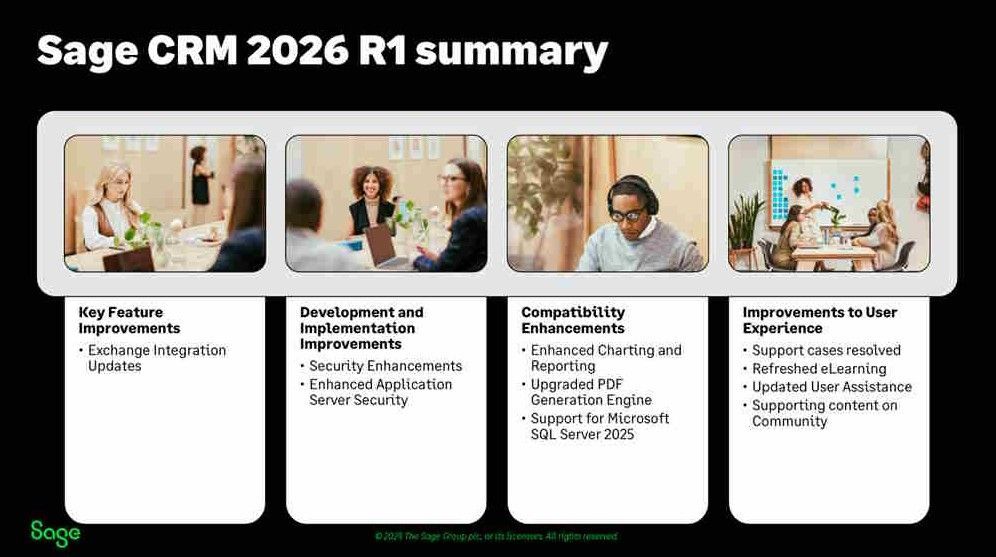


This release prioritises strengthening the underlying technology foundations that customers and partners depend upon. The update delivers enhanced security hardening, upgrades to key third-party components and continued alignment with modern infrastructure standards.


Key Areas of Enhancement:

Sage CRM 2026 R1 includes improvements across several important areas of the platform, including:


  • Expanded security enhancements across the application stack


  • Updates to Microsoft Exchange integration


  • Performance improvements in charting and reporting


  • An upgraded PDF generation engine to support modern document standards


  • Enhanced application server security controls


  • Platform support for Microsoft SQL Server 2025


Supporting Long-Term Innovation


This release reflects Sage’s long-term commitment to SageCRM as a core component of its global portfolio. With a published roadmap extending beyond 2030, Sage continues to invest in modernisation, integration capabilities and future-focused innovation.


By prioritising platform stability and technology alignment in this release cycle, Sage is creating the conditions for the delivery of new functional capabilities and AI-enabled advancements in future releases.


If you would like to find out more about the SageCRM 2026 R1 release please feel free to get in touch on 01494 490409 or email me at nick@rainbirdbusiness-solutions.com to discuss these further.

Stay Connected with ERBS


Read our latest updates


Enquire now


Get in touch

 

By Nick Rainbird May 15, 2026
ERBS's Contracts module for SageCRM allows businesses to easily create and manage contracts, renewals and automatically generate sales orders based on the contract billing frequency, helping teams streamline operations, reduce manual effort, and improve billing accuracy. Fully integrated with Sage50 and Sage200 the auto generated sales orders can then be posted from SageCRM directly at a click of a button. Key Features: Contracts can be created directly from sales quotations or orders Supports multiple and custom billing frequencies (4 weekly, monthly, quarterly, annually) Contract and Product level Site management Process contract amendments midterm tracking historic changes and authorisations if required Easy Management of Annual Price Increases at product level Renewal and purchase order reminders and dashboards On Hold and Cancellation processes By connecting contracts directly to automated sales order generation, businesses can create a more reliable and scalable process for recurring business that help teams work smarter, improve visibility, and accelerate growth If you would like to find out more about the Contracts module for SageCRM please feel free to get in touch on 01494 490409 or email me at nick@rainbirdbusiness-solutions.com to discuss these further.
Sales team using SageCRM integrated with telephony system to manage customer calls
By Nick Rainbird December 5, 2025
Learn how integrating SageCRM with your telephony system increases sales efficiency, improves customer engagement, and accelerates deal closures.
By Nick Rainbird September 9, 2025
 Have you ever found yourself juggling multiple quotes for a single, large project where your customers are all bidding against each other? For sub-tier suppliers , managing these complex sales scenarios can feel like a labyrinth. This article will show you how to gain clarity and control. This requirement is quite common in project-based or contract-driven industries. Think of a government agency, construction suppliers / manufacturers, or a large enterprise inviting multiple vendors or subcontractors to bid. As a supplier, you might be asked by several of those bidders to provide pricing. This creates a many-to-one relationship between your quotes and a single ultimate project. This is a common pattern where your company acts as a sub-tier supplier, and needs to: Quote to multiple potential prime bidders. Track all activity against the same external project or end customer. Ensure transparency, avoid conflicts, and consolidate visibility across sales engagements.