CRM and Marketing Automation: Key Differences, Benefits and Top Integration Tips
CRM and marketing automation software each have their own strengths. However, using them separately can sometimes result in fragmented data and less efficient workflows. This blog will teach you the benefits of integrating the two software types.
Marketing Automation vs. CRM: the Key Differences
Customer relationship management (CRM) software manages customer data and helps build relationships. Marketing automation software automates repetitive, time-consuming marketing tasks.
Both tools are similar in the fact that they help to drive revenue growth. However, they have different uses within the customer journey that help to achieve that growth.
Marketing teams often use automation tools in the early to mid-stage when potential customers learn about a brand. These tools help generate leads and move them toward becoming customers. Sales teams use CRM systems later in the customer journey to nurture leads, close sales and maintain relationships to encourage repeat business.
The below table shows seven key differences between marketing automation and CRM software:
| Marketing automation software | CRM software |
|---|---|
| Primary functions help you automate campaigns and marketing tasks | Primary functions help you manage customer interactions to get more deals over the line |
| Typically used by marketing teams | Typically used by sales teams |
| Helps you streamline marketing efforts to increase engagement and drive more qualified leads | Helps you build customer relationships that enhance customer satisfaction and loyalty |
| Key features include lead nurturing, newsletter automation and social media management | Key features include contact management, sales pipeline management and lead tracking |
| Workflow automations help you schedule posts and send email campaigns | Workflow automations help you score leads and track deals |
| Reports measure marketing campaign effectiveness and lead conversion rates | Reports measure sales rep performance and pipeline status |
| Can use artificial intelligence to personalize communications and optimize campaign timing | Can use artificial intelligence to predict customer behavior and recommend the next best actions |
5 benefits of integrating your CRM and marketing automation platforms
Handling CRM and marketing automation in one place can free up your teams’ time to focus on high-priority activities that turn leads into customers.
Here are five more benefits of marketing automation and CRM software integrations.
1. Unified customer profiles to spot patterns and trends
By combining an all-in-one CRM and marketing automation solution you can keep everything you know about customers in one place, making it easier to spot patters and trends. According to Adobe research, prioritising your customer experience (CX) like this can help you outperform others on key metrics like referral rate, customer acquisition and repeat business.
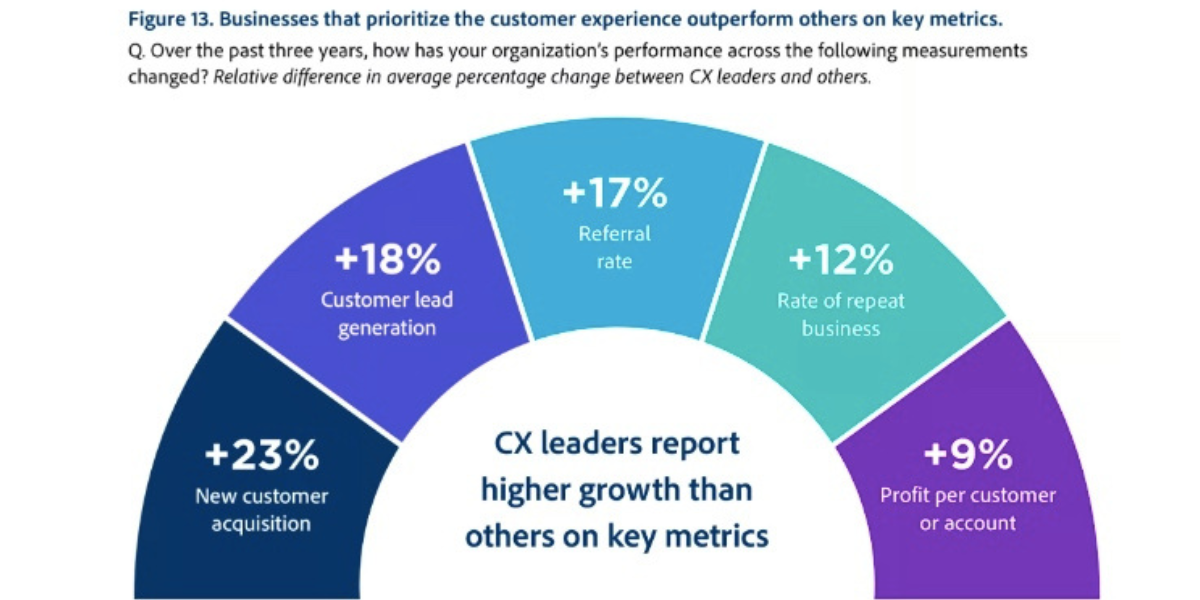
The happier you make customers while engaging with them, the more likely they are to keep buying from you.
2. Automated lead qualification, scoring and nurturing to keep your sales funnel moving
You can use a CRM and marketing automation platform to assess each lead's potential using predefined criteria and engage them with personalised interactions over time. Additionally, you can use CRM features to automatically qualify leads and prioritise them with a numerical value. After that, you can use marketing automation to trigger follow-up campaigns with your most qualified leads to convince those people to take the next step on their journey.
Automating your lead qualification and scoring processes within your CRM ensures that salespeople only receive high-quality leads.
Marketing automation ensures that prospects who are not ready to buy are still engaged with and guided through the sales funnel until they are ready.
3. Seamless data sync for more accurate decision-making
Keeping your CRM and marketing automation platforms updated on one system makes you more likely to have consistent data. Taking that, you can create more accurate reports and make better decisions. Additionally, taking this unified approach helps eliminate data silos so you can track and analyse interactions across all touchpoints with confidence.
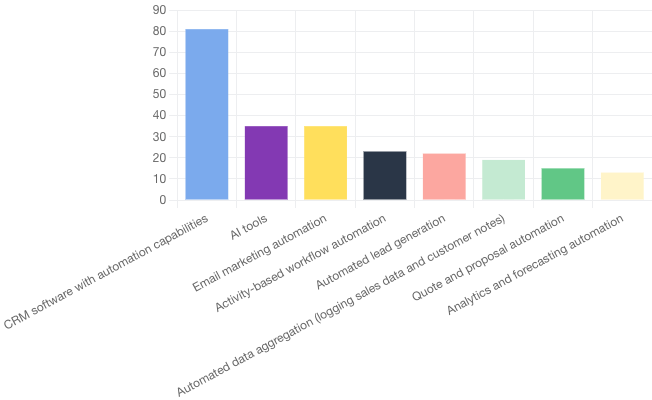
According to our State of Sales and Marketing 2023/2024 report, 81% of respondents already use CRM software with automation capabilities. This can be accessed by completing the form below.
Which automation tools and technology do you use?
nn
92% of respondents use at least one automation tool in their role.
What this means is many of your competitors could already be using an integrated system. To compete, you must have your own unified view of customer interactions and campaign performance.
4. Provide in-demand, personalised experiences more easily
Real-time CRM insights can give you a more detailed overview of each customer. Using this knowledge, you can better tailor sales and marketing messages. For example, if your CRM pinpoints a customer who keeps opening emails and interacting with blogs about your new accounting software feature. You could use these events to trigger a personalised email with a discount to increase their chances of upgrading their plan.
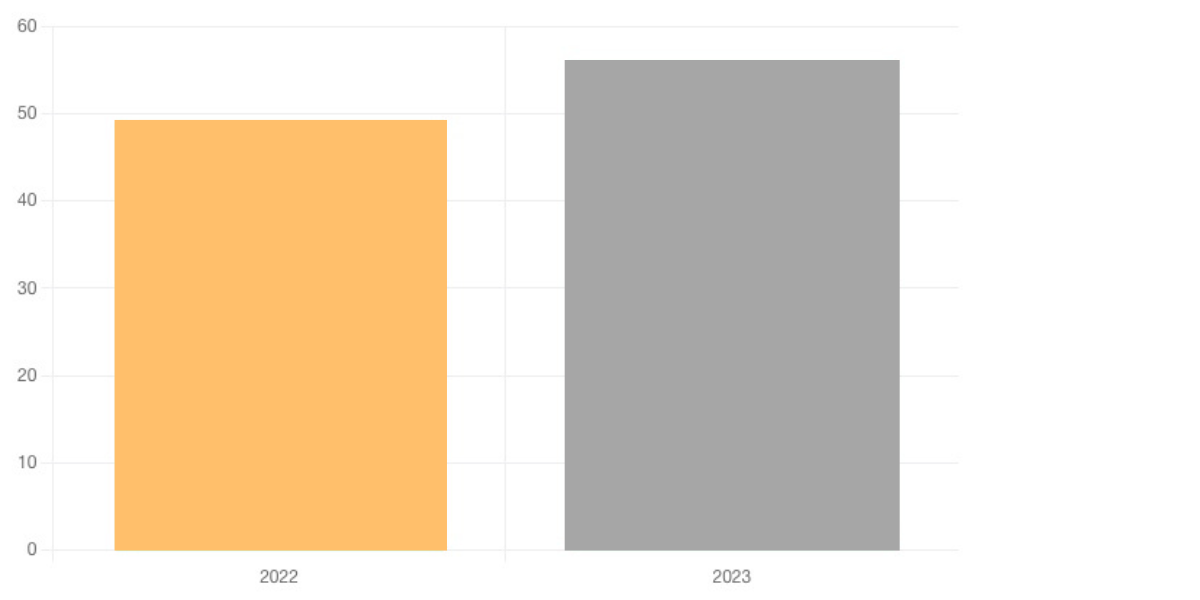
Increasing the relevance of campaigns like this can drive more sales. Research from Twilio shows that over half of consumers say they’ll repeatedly buy from brands after a personalised experience.
Over half, 56% of customers say they will become repeat buyers after a personalised experience, a 7% increase year-over-year.
While marketing automation drives these targeted campaigns, you can manage the resulting communications and relationship-building efforts directly within your CRM.
5. Aligned sales and marketing for enhanced collaboration
Using one integrated system to share and track sales and marketing efforts will provide an overview of everything that’s happening in one place, allowing both teams to see what works and what doesn’t.
Seeing what the other department does can help team members understand each others’ roles and collaborate more effectively.
When teams work together, they can create more consistent messaging, giving prospects a seamless experience as they transition from leads to customers.
For example, your marketers can use sales reps' notes about common customer pain points and questions to develop content. Sales teams can then use this more tailored content when interacting with prospects.
A coordinated approach like this means prospects get consistent, relevant information at every journey stage.
Over time, this strategy can increase people’s likelihood of engaging with you, trusting your brand and buying from you more often.
Stay Connected with ERBS
Read our latest updates
Enquire now
Get in touch